Australian COVID-19 Misinformation on Facebook
What is Misinformation?
False information about the COVID-19 pandemic is spreading which has a direct impact on people around the world. Most of the common fake news cases during the pandemic are deliberately created by producers and communicators in order to achieve certain subjective purposes. This makes false information often appear in social media, informal news sources and fringe news media. The dissemination of wrong information may undermine social stability, disrupt public order, and undermine political order. False information on the Internet often deliberately distorts the facts, thus intensifying social contradictions, and finally intimidating netizens to carry out group activities. The widespread spread of false information on social platforms can easily cause social panic and affect the normal production and life order of netizens.
How does Misinformation Spread on Facebook?
Individual User Sharing: Individual users may share posts or links containing false information on their personal profiles, which can include misinformation about vaccine efficacy, side effects, or conspiracy theories.
Social Circle Dissemination: Misinformation can spread within a user's social circle as friends share, like, or comment on such posts, increasing the exposure of the information.
Facebook Groups and Pages: Some groups and pages may disseminate false information about the COVID-19 vaccine, attracting a significant number of followers or members. These platforms can be abused for the spread of misinformation.
Ads and Promoted Posts: False information may receive wider exposure through Facebook's advertising and promoted posts feature. Advertisers or post creators may pay to push false information to a larger audience.
Algorithm Recommendations: Facebook's algorithm may show users related content based on their interests and interactions, including false information. User engagement, clicks, or comments on false information can result in more similar content being recommended to them.
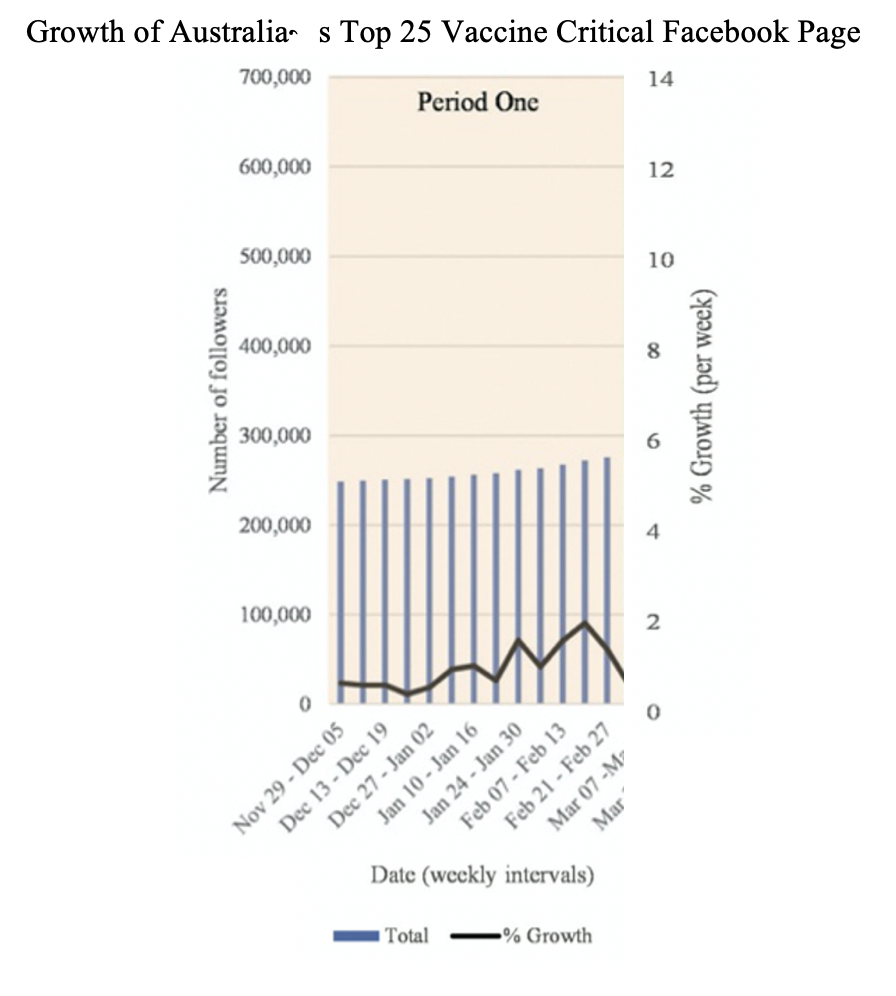
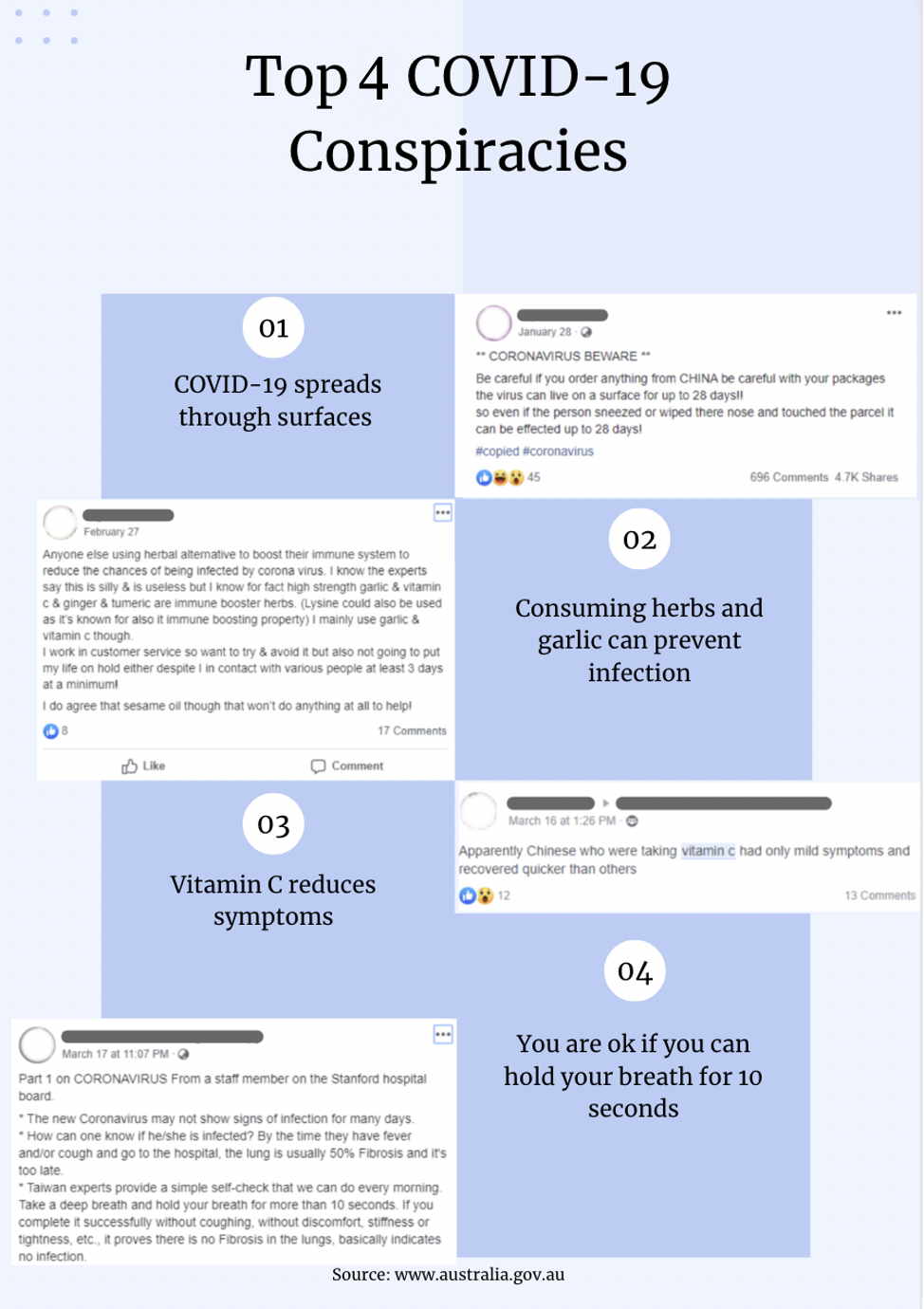
From December 2020 to February 2021, the Australian news cycle drove unrest and fear surrounding the development of the COVID-19 Vaccinations. Several groups began to gain popularity on Facebook and YouTube for their discourse and creation of conspiracy theories.
News Discourse from December to February

The spread of online conspiracies resulted in an increase to user participation in groups. Users generated content and shared various conspiracies relating to cures for the virus, preventative measures, and origins. While this type of discourse was seen on a global scale, influential Australian figure Pete Evans perpetuated conversation in Australia by sharing unorthodox and dangerous health advice about COVID-19 vaccinations. Further, in this period, groups overwhelming shared critical posts about the vaccine and memes related to the conspiracy theories.

March 2021- July 2021: The Government Control Misinformation Era
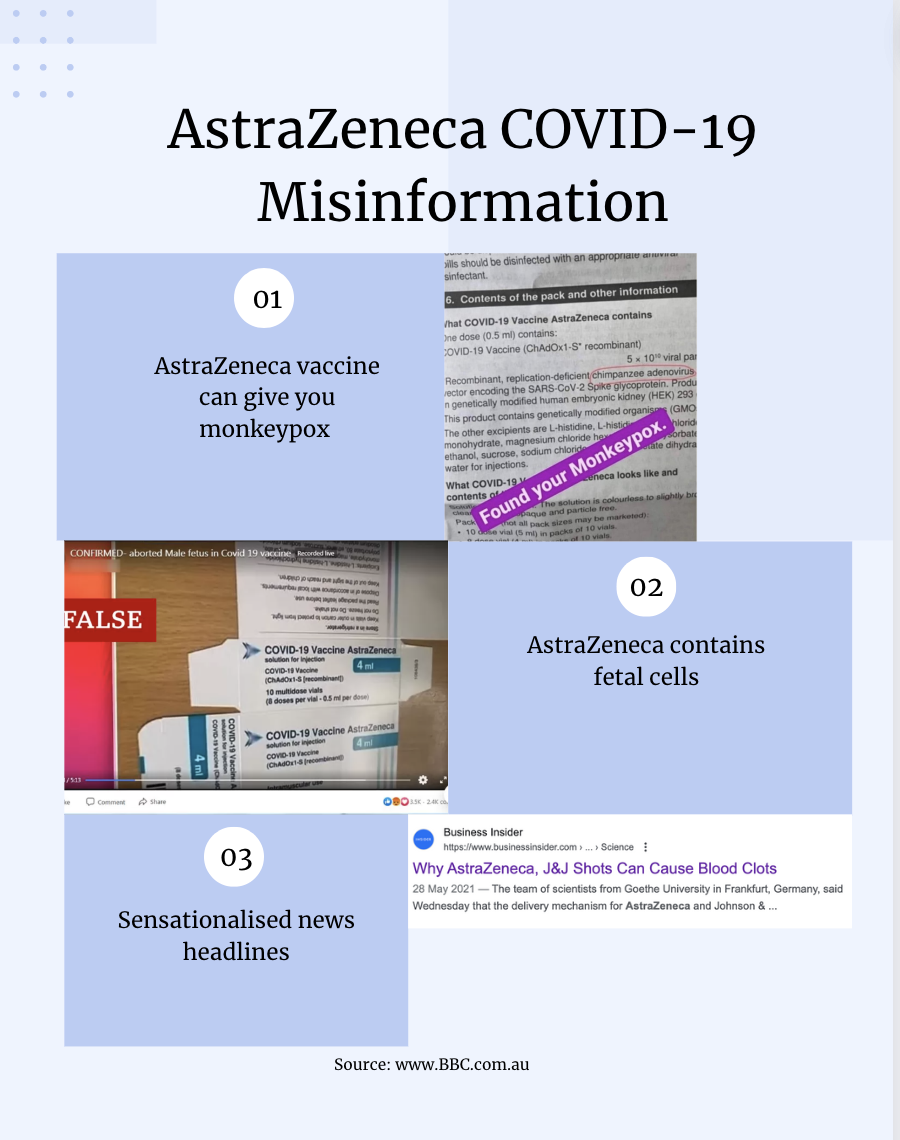
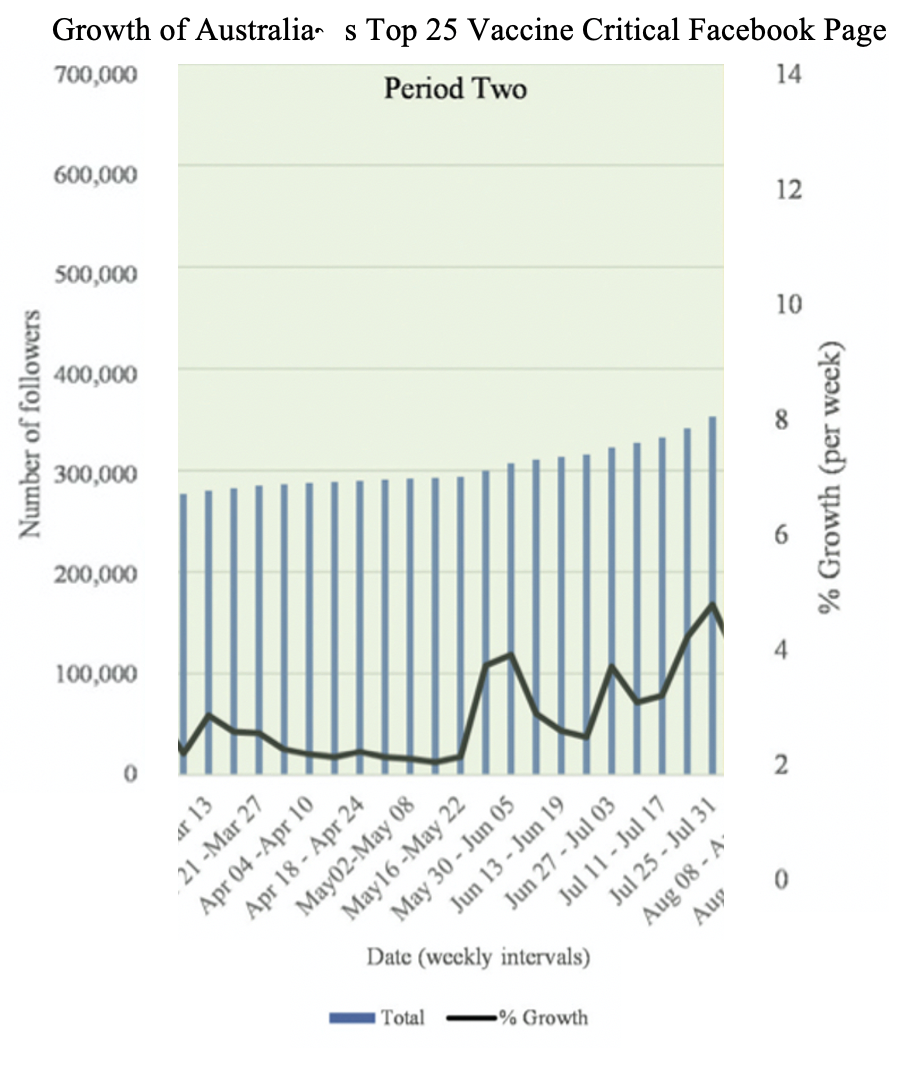
From March 2021 to July 2021, Australia was beginning to roll out the nation-wide vaccination program. However, increased reporting on Government mandates and the focus on AstraZeneca resulted in a shift of misinformation to focus on the safety of the vaccine and the power that the Government posses to enforce rules.
News Discourse from March to July

During this period, trends in misinformation discourse surrounded the excess control possessed by the government, media and corporations. In particular, conservative media outlets such as Sky News faced social media bans for their spread of COVID-19 misinformation that discredited the efforts of several governments. This type of coverage coincides with the discussion and announcement of vaccine mandates on June 28th. April to May saw extensive coverage on the AstraZeneca blood clotting incidents, inciting panic and distrust in various COVID-19 vaccinations.

August 2021- October 2021: The Vaccine Logic Misinformation Era
Analysing news discourse from this period reveals that many violent anti-lockdown protests were held throughout the country. Further, Victoria announced their roadmap out of lockdown, vaccine mandates and a vaccine passport, where individuals must be fully vaccinated in order to enter venues, shops and facilities.
News Discourse from August to October
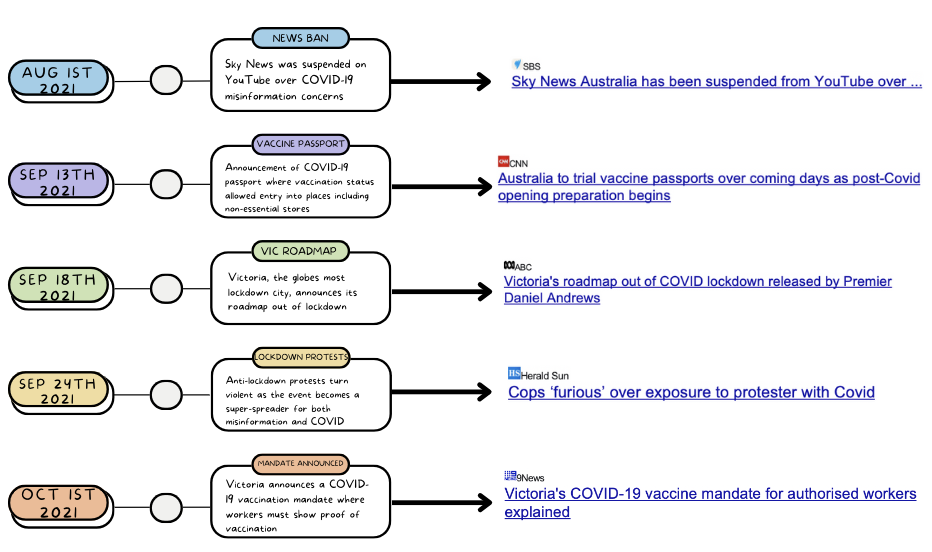
The announcement of vaccine mandates sparked controversy through anti-vax communities as it hindered them isolated from an emerging society. Consequently, September 19th to 25th experienced the sharpest increase in vaccine critical Facebook pages. Whilst the topics of excessive government control and mandatory vaccinations remained in the top 3, there was an increase focus in heroes resisting vaccinations which resists the narrative of vaccine mandates being reported in Australian news.
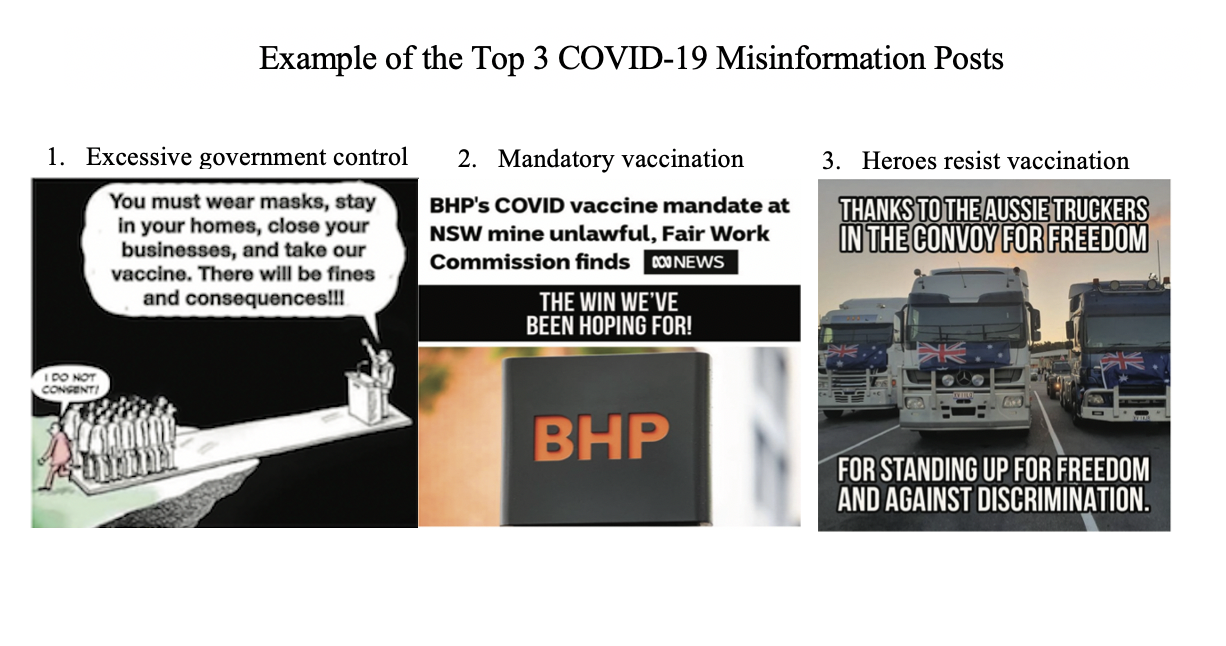

COVID-19 Misinformation Data


An online survey of 2,196 Australians aged 18 and older was conducted by McNair yellowSquares Pty Ltd. Among the 2,196 respondents, 1,082 (49%) were male, 1,110 were female (51%) and 2 identified as non-binary. A further two respondents chose not to disclose. Of the respondents, 177 (8%) were Gen Z (18-22), 691 (31%) were Gen Y (23-38), 577 (26%) were Gen X (39-54), 608 (28%) were Baby Boomer (55-73), and 143 (7%) were 74+. According to the statistics, 66% of people said they had encountered covid-19 misinformation on social media, and 19% of people between the ages of 55 and 73 and 8% of people over the age of 74 reported having been heavily exposed to COVID-19 misinformation. This data suggests that some producers of misinformation may be intentionally targeting older people. This is because older people are typically more vulnerable to various threats and risks in the digital world, and they are relatively less digitally literate and less able to recognize misinformation or verify the credibility of online information. As a result, they are more likely to be targeted by online fraud, misinformation, malware, and other cyber threats.
Scan QR code for more information